Out-FM is a weekly progressive queer show on listener-sponsored, noncommercial WBAI/Pacifica Radio. It airs at 99.5 and wbai.org, generally on Tuesdays from 8-9 PM. Please support us during our pledge drive. Become a member for $25 or a BAI Buddy (sustainer) for $5/month or more. Go to give2wbai.org or call 212-209-2950 and let them know you listen to Out-FM.
Sign up for our Weekly Newsletter with show announcements
Aired on Out-FM, Tues., April 20, 2021 from 8:00-9:00pm, on WBAI/NY & listen at https://www.wbai.org/listen-live/

Jae Yates (they/them/he/him), Twin Cities Coalition for Justice for Jamar (TCC4J)
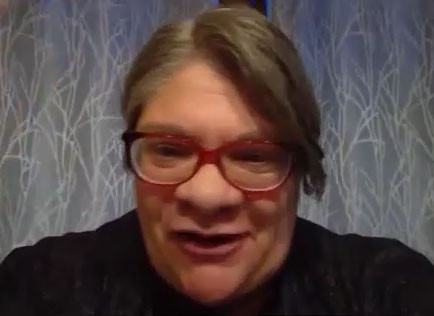
Jesse Sundin (she/her), TCC4J
In Minneapolis, as Derek Chauvin's trial for the murder of George Floyd wraps up and as community resistance grows in the suburb of Brooklyn Center in response to the outrageous murder of Daunte Wright, we speak to two queer activists on the ground: Jae Yates, a Black trans organizer, and Jess Sundin, a white lesbian organizer -- both with Twin Cities Coalition for Justice 4 Jamar Clark (TCC4J), a Black man murdered by police in 2015. Both are also active with the National Alliance Against Racist and Political Repression. Follow them on twitter @TCC4Justice)
Rush Transcript and video follows:
Bob Lederer (00:01):
I'm Bob Lederer. We're recording this segment on April 18th, 2021 as the trial of Derek Chauvin for the murder of George Floyd moves to a conclusion and perhaps a verdict may be announced by the time this program airs. And as the community resistance grows in the nearby suburb of Brooklyn center in response to the outrageous murder of Daunte Wright. And as the black lives matter movement and the broader movement against racist police violence grows nationwide. We think it's critical to speak to local activists on the ground in Minneapolis, Minnesota, which is ground zero as it were. And we're now joined by two guests via zoom. Jae Yates is a Black Trans organizer with TCC4J (Twin Cities Coalition for Justice for Jamar [Clark]), which is a black led led anti-police violence organization currently fighting for community control of police. Jae joined TCC4J last year as an organizer for Taking Back Pride, a protest against police and corporate presence during pride celebrations in the Twin Cities.
Bob Lederer (01:12):
Listeners may recall incidentally, that we have a similar, a parallel group here in New York called the Reclaim Pride Coalition. Jae works also with the community, a network Minnesota, a combination of three former pop-up mutual aid sites working to bring food and household supplies, community members, as well as supporting protesters with first aid supplies. Jae's pronouns are they, them, and he, him. Welcome Jay.
Jae Yates (01:43):
Thanks for having me.
Bob Lederer (01:44):
And our second guest, Jess Sundin is a white lesbian. Who's been organizing in Minneapolis for nearly 30 years from anti-war activism to fighting government repression, specifically as a grand jury resistor. That is a person who, along with her wife and 22 other activists in 2010, took a principled position of refusing to participate in an FBI directed fishing expedition to gather intelligence on the radical movement. Jess Sundin joined the local fight against police terror.
Bob Lederer (02:14):
After the 2015 police murder of Tamar Clark. Since then she's worked with the TCC4J , (Twin Citys Coalition for Justice for Jamar) and the National Alliance Against Racist and Political Repression to demand justice for countless stolen lives. While also building the fight for community control over the police. She lives with her wife and their teen daughter in South Minneapolis, less than a mile from where George Floyd was killed last summer and her pronouns are she and her. Thank you, Jess, for joining us on Out-FM.
Jess Sundin (02:45):
Thanks, Bob. It's great to see you again.
Bob Lederer (02:48):
Likewise. Folks may recall that shortly after Jess's subpoena to the grand jury, this is about 10 years ago. You were guest here on Out-FM to tell us about the really horrendous repression that you and your comrades had been subjected to, which included an FBI raid on your house,which was quite a horrible experience to live through, but you certainly came out the other side victorious and those grand jury subpoenas were withdrawn.
Bob Lederer (03:23):
And you were able to maintain the fight and not go to prison as so many others, including actually myself in 1985 and a similar investigation. So many others were forced to do prison time.
Jae Yates (03:37):
Alright, so Jae Yates, let me start with you as the Chauvin trial nears, its conclusion, how would you assess the level of organizing for justice in Minneapolis and what are the key demands right now around that trial? And also of course the developing case around the murder of,uDante Wright. And,ualso what would you say is the, the feeling among organizers that you work with?
Jae Yates (04:08):
So that's, that's a lot of questions but I think I would say that, h think the coalition that TCC4J , Twin Citys Coalition for Justice for Jamar) organizes with, s really stong in our stance about the trial and we really know what we are pushing for. There are several pieces of legislation that, ths coalition has kind of signed on to support,, ancommunity control of police is kind of the one that TCC4J champions. I think that we really, independently of the outcome of the trial, Knowthat that's a critical part of fighting police violence in this city in particular. We can't move forward unless we have community control, in my opinion. I do't think that a lot of the other proposals that are being put forth are meaningful in any way to control police violence.
Jae Yates (05:16):
I don't think that they're robust enough and I don't think that they taking to account the massive amount of power that the police have. And so I think that we we're really pushing for community control right now as to the feeling on the ground. I think, I think someone else asked me, like, do you feel optimistic, or do you feel pessimistic about the future,following the trial? And I said, I don't know that I really understand how to answer that question because it's not about pessimism or optimism. It's we have to fight, we have no choice. What else are we supposed to do? Allow a hostile military force to occupy our city? Are we supposed to allow police to continue to murder us? I think the vibe is just me have to keep going.
Bob Lederer (06:13):
Absolutely. I think part of what I was trying to get at about the feeling was the response to the murder of Dante, right? And how that has obviously led to a resurgence of the movement, certainly in Brooklyn center, where there've been continual nights of very vociferous and, and militant protest. But also throughout the Minneapolis Metro area, maybe you could kind of tell us what the climate has been like since.
Jae Yates (06:44):
Yeah. I think for context, Brooklyn Center is a mostly Black neighborhood or suburb. And I think that Black youth right now are really just have no, they have no, no recourse to express like how watching this play out time and time again is making them feel. And I think that the quote unquote, "rioting and looting" is happening because nothing has been done to address the past time that this happened. There's still trauma that people are dealing with from Philando. People are still dealing with the trauma from Jamar because none of those murderers faced any consequences. The only officer that's ever faced consequences for murdering someone was Mohammed Noor. And that's because he murdered a white woman point blank period. It's not that people want to be out here destroying things for fun. It's that no one is listening to black people in this city and black people have tried it the other way.
Bob Lederer (07:58):
So I think what I was getting at, in the question about the feeling among organizers was a particular emphasis on how things have changed in the week and a half or so since the murder of Dante Wright. Of course there've been many nights of fierce militant protest in the suburb where he was murdered, which is Brooklyn Center. But I know there's also been protests around the Minneapolis Metro area. So maybe you could share with us kind of what that climate has been like.
Jae Yates (08:37):
Yeah. Brooklyn Center is mostly Black people that live in Brooklyn Center. And I think that the youth that are down there and like the people in general that are down there, but I think that this has been really hard for young people to watch and to kind of up in this. I think that people don't see anything being done and they're just being handed kind of platitudes by our governor, by our black police chief as though that means something significant for policing being better in our city. UI think that people are really sick of watching this happen over and over and not getting any, any justice whatsoever, not even kind of like step storage justice. Uand I think that the vibe in Brooklyn center is that people, people can't go home after this, how are they supposed to go home and hang out in their house, knowing that they could leave the next time and get stopped for a bogus traffic stop and die in the process of getting booked for that? I think that that's, I don't think that people fully understand how psychologically difficult that kind of knowledge is to live under. And I think that every single black kid and teenager and teacher and person that lives in Brooklyn center,ufeels that that, that could happen to them at any at any moment. Uso I think that people are militant because they have no choice. Uthere, there just has to be something has to actually come of this,ufor people,ufor once I think.
Bob Lederer (10:37):
Absolutely. And and I think it's, it's worth remembering that the coalition that both of our guests that that Jae Yates and Jess Sundin are active in is called the TCC4J , (Twin Cities Coalition for Justice for Jamar) referring to Jamar Clark, who was murdered in 2015. And of course there's more recently been the murder of Philando Castile in 2016. So there's a continuing history just in your city alone, not to mention the whole country of racist murders by police of black people and other people of color. So let me turn to our other guests to just Sundin to talk about you've been in the progressive movement for 30 years in general, but specifically the movement against police terror for for quite a big chunk of that time. So what I've you observed as far as changes in the movement over that period of your involvement and, and both positive? And if, I don't know if there's any negative changes, but it's just sort of the larger trends, both you know, from your vantage point as a, as a radical leftist within communities of color, but for you as a white person, how do you see that changing in the white community?
Jess Sundin (12:10):
So here in the twin cities Minneapolis is one of if Minneapolis and St Paul, we call it the twin cities. And then that includes all the suburbs too. But here in the twin cities, there are a couple dozen families who are very outspoken whose loved ones have been killed by police here. Uand we know them and we know their stories, but most of them didn't have the experience of everyone knowing their loved one's name when they were killed. Uto Mark Clark was the first time that everyone knew what happened. And the reason that everyone knew what happened at Jamar Clark is because, well, first there were about two dozen witnesses to his murder. It happened right outside of,ulike a club and there was two dozen black people who watched it happen. Uand despite what they witnessed the County attorney found them, found the officers,uon prosecutable.
Jess Sundin (13:13):
And in fact, you know, defended them to the public then you know, after that, it was just barely a year later that Philando Castile was murdered. And well, actually in the case of Jomar what happened when he w after he was killed this in addition to there being all those witnesses, it was where he was murdered is about a block or two blocks from the police precinct. And the community decided to occupy the police precinct. And in fact did so for, I believe it was 18 days. And in Minnesota, in November, that's no joke to occupy outdoors for 18 days, but people did during the occupation, white supremacists came and shot and injured, five of the black protesters who were part of the occupation, but the struggle for justice for Jamar was the first time that the whole city was aware of and understood the significance of police violence against black people in our city.
Jess Sundin (14:20):
And when I say the whole city, yes, it was black. People were at the forefront. The neighborhood it happened in is a predominantly Black neighborhood, Jamar was Black, but the whole city was there. That's the first time we saw Asians for Black Lives in the Twin Cities. It's when we first started hearing from Native Lives Matter, which established itself as an organization here around that same time, the Somali community came out in big numbers to support justice for Jamar. And white folks did too. We had a similar kind of response when Philando was killed when Philando Castillo was killed is the aftermath of his murder was filmed by his partner, Diamond Reynolds. And many people saw the video with her and her daughter Dayday in the car. His killer was all was prosecuted, but found not guilty. And, but it was widely known partly because Philando was a beloved community member in that, in particular, he worked in a school and elementary kids in his school called him, Mr. Phil.
Jess Sundin (15:29):
He worked in the cafeteria and he got to know all the kids' names. He knew their allergies and whatever else do. And he made sure the kids always had what they needed to eat at lunch. So he was, he was beloved. He was a union worker to his union, came out to, came out in support of him, but the young people occupied outside the governor's mansion after Philando was murder. And the case was prosecuted first time that we had seen that in the twin cities. But his killer was found not guilty. And then we've had other killings but no movements of the same kind of scope and size since 2016. And then when George Floyd was killed well, I know that your listeners in New York also stood up and, you know, Rose up with us for justice, for George Boyd, the whole world did I have family in Australia who did and it wasn't only that George was murdered, but he was tortured for a very long time.
Speaker 3 (16:34):
And there was a dozen people begging for his life. And regardless, four officers chose to take his life from him that day, and a huge, the biggest movement I've ever seen erupted in response to that part of it is I think the slow building over time of, from Jamar to Philando, some of the folks that were most active in those two movements stayed active. The broader community kind of fell away. We started to build up lasting organizations and when George was killed, the outrage on the one hand was overwhelming, but also we had organizations prepared to hit the streets. And that's what we did the first March. I think it was 20 and it could have been 30,000 people. And that we marched from where George was killed to the precinct which now stands in a rubble which as I hope one day, all police precincts are.
Jess Sundin (17:30):
But we had an incredible response and the things that have changed sort of over the course of, and since summer beautiful, amazing things have happened. I got to meet Jay this summer. And Jay is one of many people that joined our organization, but we have this amazing new generation of leaders that have come forward that are amazing speakers. They do amazing security at the demonstrations. They're really principled. I almost swore, but I stopped they're really principles. Like you know, like all movements, this movement also has, you know, opportunists. We also have Democrats who try to get, get what they can out of it. And the young people that are leading this movement with us right now see through all of that. And and they're not fooled. And so I think what we have now is the strongest I've ever seen in this movement.
Jess Sundin (18:32):
And it's, it's the strongest movement I've ever been a part of as a white person, which you asked me to address, you know, this is a black led movement. And there, there are many white people in it. Minnesota has a lot of white people. Some might say too many which would be fair. It's a tough place to live if you're not white because it's overwhelming. I think and I think that one thing that's incredibly positive that has come out of this last almost year of struggle is that white folks who had been able to look away, have not been able to look away. And ultimately people had to choose a side. And it's really the young people that laid siege to the third precinct of the Minneapolis police department. They called the question, which side are you on? And I'm glad to say that there are, you know, a good number of white folks that have, have joined the ranks of this movement. But it, it remains, I think really importantly, a movement that is black led and of course in a place like Minnesota, we also have a really important leadership role for indigenous folks who are also killed at extremely high numbers here, where we live.
Bob Lederer (19:51):
All right. Well, all of that is definitely, you're going to have to edit that. Sorry. No, no, no problem. No, it sounded, it sounded fine. So all right. That's those are some encouraging signs of the movements, growth and development. So now I want to turn to the question of the role of LGBTQ plus people in the movement. And of course out FM is it has an intersectional analysis. And so we never look at any issue just solely through the prism of how does this affect people. And that's why we're, we're going to continue the rest of this interview to focus on the larger issues around police terror. But we do want to include in the questions we examine the role of queers. And so our co co-host Samuely map
Stahimili Mapp (20:48):
Has a question. Yes. Thank you, Bob. I was, I was glad that you raised the point to Jess about young people, so youth movement, or we're going to organize by with them. So my interest was for either you or Jay to answer possibly J what the involvement of the black youth has been in terms of mobilizing and keeping the movement going. And even in terms of the leadership of the movement, you know, our youth, black youth, particularly in Minnesota involved. Yeah. absolutely black youth are leading the movement. There are, I mean, I think, I think that black people right now are maybe being forced to reckon with that. Like there have always been black people. And I think that there, there has been a lot of tension with that, in my opinion.
Jae Yates (21:57):
I remember when I first was working with these T for J for pride this year, which actually is a little bit of backstory I had been to TC for Jay's kind of anti-corporate pride event, like the first year that I moved here for school. And I was very disillusioned with the pride parade that I saw. And then I saw all of these people with this giant banner basically disrupting the parade. And so I joined in walk behind them and that was like my first TCC4J , (Twin Citys Coalition for Justice for Jamar) experience. Uand so that's part of why I decided to join is that I feel that that action really demonstrated that TCC4J understands that,black oppression and oppression are interlinked,and,both have the same, the same root cause,of white supremacy and capitalism.
Jae Yates (23:00):
But I think that there is sort of a maybe we'll call it a learning curve for some black people that are kind of maybe have been in the movement before and really come at it from a, maybe Judeo-Christian kind of lense. I think that there has been pushback to having openly queer people lead the movement. But I think at this point we're kind of like, we've been here. I don't, I don't know what to tell you about it. It's just, it's, it's a lack of understanding of, Black history really to think that that black queer people sprang up because people did it first. We did that first,uand I think that black people have always been involved in the civil rights movement. And I think that that's something that has been that's knowledge that has been taken from a lot of, of black people.
Jae Yates (24:02):
They, they simply just don't know that and have actively been, I think information about the past of our movement in general has been actively stolen from Black people. And so, yeah, there's definitely tension. There's definitely,ua lot of those same opportunists that Jess mentioned are,uhomophobic, transphobic, misogynists. But I think it's been really encouraging to see,specifically like young black women,absolutely refuse to take any of that. They are,very vocal,and are not afraid of confronting it when they see it. And there's been incidences of, of that in Brooklyn Center where they've literally kind of run, run people that were,uthat were disrespecting them out of the protest. Uso I think that there is, there is sort of a militancy that I really appreciate,in the black youth. And I it's militancy that I think I help create, ccasionally, heah. Good, excellent. Jathan Jesse, have you had some,
Jess Sundin (25:26):
It adds something that that's all right. And I think it would be of interest to your listeners that I have found to be a very strange twist of events here during the trial of Derek Chauvin the police chief of Minneapolis testified, and I believe he was the one, but it could have been one of the other 5,000 cops that testified because apparently the thin blue line Chauvin is just one step on the other side of it. So a lot of police testified against him and I believe it was the chief was talking about how great and awesome and forward-thinking our police department fear is and how they've really transformed themselves. And specifically identified that their amazing work with, or policies about the trans community which I have never heard from a single trans person. I am not trans, but like it was like made up.
Jess Sundin (26:20):
It was just by the same token. The County sheriff here is, I believe he's Lebanese of origin, but he's gay. And that was certainly part, you know, there was definitely like the rainbow people were all about voting for Hutchinson when he ran for sheriff. And now he and his deputies are some of the leading edge of repression in the twin cities right now. And so there's also been this attempt to kind of use or pit the LGBTQ community against the black lives matter movement or the movement against police terror. And I think people like Jay and the experiences that they're describing are why that's failed. Like for one we have especially black youth, but other people who've been yelling at all of the white people. Who've been trying to ignore police violence ever since Jamar was killed. We've been fighting about it inside the whole community. But then also right now, it's very evident that we have people, especially young people on the front lines and the people that are against them are either claiming to be the friends of the trans community or actually promoting themselves as some sort of gay sheriff icon. So it's just been a very strange time to see law and order try to kind of pink wash themselves.
Bob Lederer (27:51):
Yeah. And again, we're speaking with two local organizers in Minneapolis, Jay Yates, a black trans organizer and Jess Sunden, a white lesbian organizer, and both of them are among other things involved with the twin cities coalition for justice, for GMR that's Jamar Clark, who was murdered by police in 2015. And that goes by the acronym that you've heard mentioned TCC four J. And let me ask let me ask Jay since Jess mentioned that the police chief is bragging about the alleged you know, forward-thinking reforms have been made in their policy, the police, his policy towards the trans community as a black trans person. What, what does your view of that statement? I mean, the DFL tries to do this too, so it's also about the DFS, the democratic farmer labor party. So Democrats they, they do this too where they try to to position themselves as though they're allies to the LGBTQ community.
Jae Yates (29:15):
They try to recruit LGBTQ people to join their ranks because they know that that's the that's kind of the issue is your, for a lot of people is, is sort of gay rights and like, that's great. But regardless of how many trans people you recruit into policing or how trans council members you put on the city council they are serving a racist white supremacist system. They exist in this system to make it work, not to dismantle it. And so I think that a lot of people are very aware of that in our movement right now, I think that they've seen it enough and they've seen how much, it doesn't matter to have a, a black man as the chief of police and how little it matters to have a black trans woman as one of our city council members, Andrea Jenkins has done very little to actually advance the rights of anyone actually, but least of all people.
Jae Yates (30:28):
And so I think that like identity politics are really on their way out. And I'm really hopeful that people, people are seeing that you have to have a deeper analysis than just, Oh, this person represents, Oh, I'm getting, I'm getting political representation because this person looks like me or they they're a Democrat, so they must be good. Like they must be a real leftist. Like I think people are realizing that that doesn't make any sense and that these people that are kind of in positions of power are there to maintain those positions of power and maintain systems. And so I think, I think the youth are really, are really clued in and don't, and like Jess said, don't fall for it.
Bob Lederer (31:16):
All right. And just for, for those who may not be clear since J H you use the term identity politics, you said it's on the way out. And of course that has a very tortured history as a term, because it was actually coined originally by the black lesbians of the Combahee river collective in the 1970s. And it was at that time, a positive term to talk about oppress communities unifying based on their shared identity of people subjected to oppression, and they would stand together unify and fight for their rights. Of course, it's now by the right wing and many other forms. And by liberals, some liberals in turned into it's exact opposite, which is, and maybe rather than my giving my definition, why don't you say, since you use the expression that it's on its way out, what you mean by identity politics?
Jae Yates (32:13):
Yeah. I see identity politics as having been morphed from its original idea. It's, it's a lot like how people have started to misuse intersectionality where they, they don't fully understand the origin of the term and then twist it to their own gains. And I think that our political representation has really done a lot of that by co-opting kind of the language of our movements. And so when I say identity politics, I mean, when people assume that just because a person is black, that they have to have good politics on black issues, that they, that they understand it in section OBS that they that they have a good political grounding in the situation that they should be listened to regardless of what actually comes out of their mouth. And so I think that there is a lot of that in our movement right now. But I also think that people are starting to recognize it for what it is, and it is an incomplete way to build political coalition. It's not enough to have an oppressed identity. You have to also understand the nexus of oppression that you exist in, and you have to understand how you relate to other oppressed people. It's not just enough for you to know that you are oppressed and be oppressed. And so, yeah, that's what I mean by, I did thank you for that clarification.
Stahimili Mapp (33:58):
Kind of interesting, cause I was going to ask you if you, if I mean your AIG in Minnesota is a Keith Ellison, black man has put forth some, a few progressive thoughts I've heard uttered from his mouth. So I wonder if you, if you, do you get any backing, you know what I mean, people, as you were saying, Jessica, sort of seeing this, this the F the Shovan trial as some sort of milestone in terms of the way the police, we, we may have broken the blue code and all of that business the blue wall that, all of that business. So this, they they're saying that this is forward thinking, and I've heard some people actually saying, well, that's because, you know, the ag out there is black man. So I was wondering what's your, both your perspective is on that. Does he give you any kind of support at the grounds, you know, grassroots level? I hear in anything from, from, from that level of government to support the work that you're doing,
Jess Sundin (35:11):
Jay stayed down. I don't know. I'm, I've known Keith Ellison. Most of the time that I've lived in Minnesota, so the better part of 30 years he used to be a radical, maybe even a revolutionary Oh, how far he's fallen. He's not he, I don't know if he aspires to a higher office or not, but he acts like someone who does his latest sort of shocking contribution to justice in Minnesota was to journalists here filed an injunction, tried to get a temporary injunction against police who were firing on them for who were covering the demonstrations and the police response. Many of them have been injured and arrested and detained and had their equipment damaged as well. So they tried to file a restraining order against the police, and it was L G Ellison who filed arguments against the free press and on the side of the police.
Jess Sundin (36:16):
And I'm glad to say that a judge thought better of it and sided with journalists. Unfortunately, police ignored that judge's decision and continued to violate the rights of not only community members, neighbors, protestors, medics, but also still journalists. So we have a long list of grievances with AGL Ellison. I would say I've watched the trial pretty closely. I think they put on a serious case against Derek Shovan which before we watched it, we were all holding our breath. And I think it was a solid process. I'm not a lawyer, but I think it was a serious effort to, get a conviction. So I can say that positive about his contributions today,
Bob Lederer (37:07):
But wouldn't you say, Jess, and also Jay, and like any opinions you have that, that strong performance in the Chauvin trial is wouldn't you say that's largely fueled or motivated by the massive street uprising starting last summer and going on for months so that combined with the just absolute blatant and on, on rebuttable nature of the video that no human being with a heart, could look at that video and say, well, I'm not so sure. I don't really know if he killed if he, it was murder.
Jae Yates (37:52):
Yeah. I, I think that there are a lot of white people in Minneapolis still that think that people are, that Chauvin is being prosecuted out of like the goodness of someone's heart, and I 100% believe that if there hadn't been a massive uprising, this would have gone the same way that every other police murder has gone, where they either do a really bad job at prosecuting and the person doesn't get convicted or they just don't prosecute at all.
Jae Yates (38:36):
There's been what, like 400 and something police murders. Since, I don't remember what the S what the statistic was. I think it was since 2000, 2000. Yeah. Umhere's been like 400 something murders, mnd there's, there's been one conviction that's, morrifying. And I think that that pattern would have absolutely continued if there had been, mn uprising. I think, I think that there is sort of a feeling in some ways that even though there has been no effort to put forth real evidence that, you know, Chauvin did this on purpose, it wasn't an accident. Um do think that in some ways it does still feel like a show trial just, just simply because we know that they wouldn't have put it on if they weren't worried about people rioting. Umeah.
Jess Sundin (39:37):
I mean, in fact Chauvin had, had reached a plea agreement with our County attorney while the uprising was still happening before any charges had been brought against him. And it was strangely federal attorney general BARR who stopped the plea deal because it involved the federal government because of the, what the agreement, the content of where Chauvin would serve his time. So in fact, the only reason there was a prosecution is because A.G. Barr said, I don't, I don't think that, that it was a lower charge of course. And Mr. BARR said, I, I don't, I don't think that people would think that was a serious enough charge. Like so if Trump's attorney general could see that it has to be taken seriously, I'm not surprised that our attorney general who is has it past as a progressive and even revolutionary Muslim black man in Minnesota.
Jess Sundin (40:37):
I, he ought to be able to see it too. I think the others in that it kind of a two-part strategy with the trial, in my opinion, one is to try to get some sort of Chauvin as a sacrificial lamb, but all of the cops are also saying, he's the only one like this we had, we would, none of us would ever do this, despite that he had done this multiple times, he's a serial killer. He's involved in five other police murders before this despite all that, the other. So they want us to think that the policing is fine. It's just one bad cop. And that's, I think one thing that trial was supposed to prove, and there are other part of their strategy is this massive mobilization of police, national guard, state patrol, DNR officers, I guess, him state patrol coming from Ohio.
Jess Sundin (41:26):
And God knows where else there are thousands of additional police forces here in the twin cities. There's like a national guard trucks with the soldiers in full gear with their long guns. Like when all the big streets in the city, like a block from my house. And they've been here all week. They were here before they first came at the beginning of the trial, but they'd been amping up through the course of the trial and of course with the murder of Dante, right. They really got to practice the full force of the full use of force of that operation against protestors and community members. So they have a two-pronged strategy, like try to sacrifice Chauvin and see if that quiets the masses. And if it doesn't will brutalize them and arrest them and try to quiet them that way.
Jae Yates (42:19):
Yeah, just sorry. Is context like the responses part of this thing called operation safety net. And I think it's important for people to know that name. But it's been like a coordinated effort to suppress the protests like Jess said. But it is like an actual, it's like an actual thing that they're like trying to market to people as well as this positive force for good or whatever in our communities. And we care about keeping small businesses safe and we care about not having people in neighborhoods be effected by unrest, which they say this as they pretty much bought apartment buildings with flash bangs and tear gas, like every night. So it's, it's a coordinated effort that they've, that they're trying to market to the public as their effort at keeping the public safe. Well, we're moving to the last few minutes of this interview. So let me ask a final question of both of you as to where the movement goes from here. And particularly since the bulk of our audiences in the New York, New Jersey, Connecticut area, how can people not in Minnesota show their support for the black community, other communities of color that are continue to be victimized by police terror.
Bob Lederer (43:53):
So which whichever of you would like to start? And you know, so what what's on the, I mean, after whatever the verdict is in the, in the Chauvin trial, what's next for the movement? What well, let me throw in one other factor that people may remember last summer that the Minnesota Minneapolis city council passed a resolution that was ballyhooed by liberals across the country as the first step towards defunding the police and, you know, a fundamental restructuring of the role of police and public safety in there. It would be changed, I believe, to a public safety department, no longer call the police. And that's
Bob Lederer (44:32):
Been now shown to be largely a sham, but in terms of the political agenda of the, of the movements that you are a part of the particularly the TCC4J , (Twin Cities Coalition for Justice for Jamar) and any other groups against police terror, what's on the agenda. What's next. And how can people help,
Jess Sundin (44:52):
I'll say a little bit about national and I'm knowing that Jane would love to talk to you about our amazing city council in Minneapolis and local initiatives around policing were also, our group was our local group is part of the National Alliance Against Racist and Political Repression. And the National Alliance has, you know, been mobilizing around. There've been many mobilizations around since George Floyd was killed including there is plans for emergency responses in cities, across the country, to the verdict in solidarity with whatever happens. People can learn more about the National Alliance at their website, which is NARPR.org. But the National Alliance is doing ongoing work in cities across the country. Nationally not only were responding to agregious police murders like that, of George Floyd not only supporting activists who experienced repression, like hundreds who were arrested in Louisville after Breanna Taylor's murder.
Jess Sundin (45:54):
But also as a longterm agenda to fight for community control of the police and to when the release of the wrongfully convicted from prison and sort of and the national whites is a black led left, led formation. And we're just like one chapter of it here in Minneapolis, but I know that there is a chapter in New York. I don't know if they're focusing New Jersey or other nearby communities, but I would encourage folks to link up with the national lights. And I know for us it's sort of this, we're kind of walking on two legs all the time, looking for legislative sort of concrete demands that we can bring to government that will make changes for the future. And also standing with the families of stolen lives to get justice for their individual loved ones whose lives have already been taken. And I think our work will continue to look like that. And I think that's what people across the country should be doing in terms of their framework overall.
(46:55):
Bob Lederer: Okay. Thank you. And again, the National Alliance Against Racist and Political Repression -- their website is N A A R P R.org. And I'll give you Jae Yates, the last word.
Jae Yates: I think that next steps for us in Minneapolis, I think that regardless of the outcome of the trial, we're really committed to community control and seeing it happen because we think that it's part of a larger project of getting self determination and self determinative
Jae Yates (47:30):
Power into Black communities. And that, that is critical to Black liberation. And so I think that that's, that's what we're going to focus on regardless of how the trial turns out. But I think,people, who are maybe not in Minneapolis or even people that think of themselves as liberals, I would say that I really want them to start interrogating what these liberal politicians and nonprofits are saying to them. Umpecifically in Minneapolis, we've had a lot of campaigns, like you mentioned, mhat are sort of about, hebranding the police, mnd touting that as some sort of meaningful reform. And I think it's really important that people don't allow themselves to be placated by that or taken in by that, and that they continue to actually demand real, moncrete measures to, to reign in the power of police, to enact brutalism on, on communities. And so I think I've really, I've really been trying to educate people in my life about things that sound good, but don't actually have any meat to them. Umnd I think that that's sort of my, my ask to the world is, mo be aware of what you, what you support.
Bob Lederer (48:57):
Okay. And we're going to have to leave it there. I want to thank our guests. J Yates is a black trans organizer and just Sundin as a white lesbian organizer. They're both active with the Twin Cities Coalition for Justice for Jamar (that's Jamar Clark) and other,organizations working against police terror in the state of Minnesota and nationwide through the National Alliance Against Racist and Political Repression. Thank you very much for coming on Out-FM from Minneapolis. And I want to thank co-host Stahimili Mapp as well as our engineer and producer John Riley for your work. And that wraps it up for tonight's edition of Out FM. Tune in again next week at 8:00 PM on Tuesday for another edition. Until then stay strong and stay proud. Goodnight.
Stahimili Mapp (50:10):
Great. Okay, brilliant - both of you.