Tune into Out-FM on Tues., September 19, 2023 from 8:00-9:00 pm, on 99.5 FM WBAI/NY
or listen live at https://www.wbai.org/
Press Play button to stream, or green download buttons below - to download the sound file of the promo, or the program sound file.
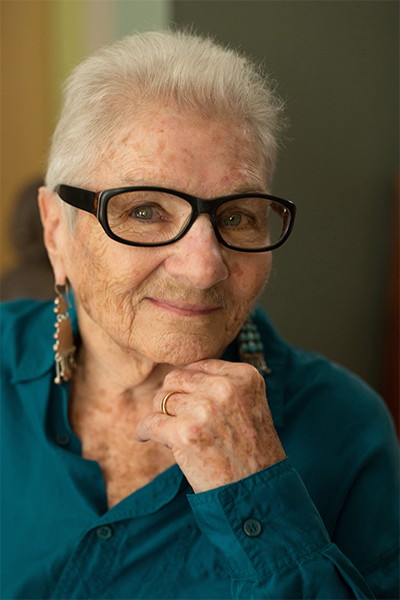
Activist Author & Poet Margaret Randall
This Tuesday, we will present Part 1 of an interview with internationally renowned writer, poet and Latin America solidarity activist Margaret Randall. It was conducted earlier this year by Out-FM producer Bob Lederer and guest co-producer Cloe Loosz. Margaret Randall is a longtime North American feminist activist who has supported Latin American revolutions, as well as a prolific writer, poet, translator, and photographer, and an out-lesbian. In 2020 she released her memoir titled I Never Left Home: Poet, Feminist, Revolutionary. She has published nearly 200 books of poetry, prose, oral testimony, and memoir, including two last year, and has made such iconic Latin American poets as Roque Dalton, Otto Rene Castillo, and others available to an English readership. She is now 86 years old. Promo for this week's show below. (Tune into Out-FM next Tues., Sept. 26 for the second and final part of this interview.)
Margaret was born in New York City, grew up in Albuquerque, New Mexico, moved back to New York where she joined the Beat Poet community, and spent time in Europe. In 1961 she moved to Mexico City, where she co-founded and co-edited the bilingual literary journal El Corno Emplumado, or The Plumbed Horn, alongside Mexican poet Sergio Monodragón. In Margaret’s words, “El Corno Emplumado bridged cultures, ideologies, and generations.” In 1967, Margaret applied for and received Mexican citizenship, since she needed better opportunities than odd jobs could provide. She had a Mexican husband and three small children. When she told the U.S. Consulate she didn’t want to lose her U.S. citizenship, they falsely told her she had automatically surrendered her U.S. citizenship when she acquired Mexican citizenship. Meanwhile, Margaret had joined the Mexican revolutionary student movement. In 1968, government forces carried out an infamous massacre of an unarmed protest rally, killing 40 students, wounding hundreds, and incarcerating thousands of political prisoners. Because of Margaret’s open support for that movement, the Mexican government withdrew its subsidies to El Corno, and the magazine ended publishing in 1969. She was forced into hiding by paramilitary intimidation and made a harrowing escape to Cuba after sending her four young children there ahead of her.
In Cuba, Margaret joined the Committee for the Defense of the Revolution (CDR) and made connections with many revolutionary figures such as Haydée Santamaría, who became a lasting mentor. In 1974, Margaret traveled to North Vietnam near the end of the U.S. war against that country. In Cuba, she also studied photography and went on to take many photos that she displayed in various exhibits and used in her books. Margaret traveled from Cuba to Nicaragua in 1979, just before the Sandinista victory, at the invitation of Culture Minister Ernesto Cardenal to conduct field research, which led to her book Sandino’s Daughters: Testimonies of Nicaraguan Women in Struggle. She lived in that country from 1980 to 1984.
In 1984, Margaret decided to focus more on writing and flew home to Albuquerque. However, a year after applying for permanent residency status, she received a deportation order from the Immigration and Naturalization Service, stating that her writings were “against the good order and happiness of the United States.” The attempt to deport Margaret was made under the ideological exclusion clause of the Immigration and Nationality Act of 1952, passed in the Red Scare era, which required the deportation of any immigrant who was a member or associate of “a Communist, Socialist, or Anarchist Party” or who advocates “doctrines of world communism.” She decided to fight the order, and the Center for Constitutional Rights provided her with three lawyers for her immigration court trial in 1986. Margaret lost this trial as the judge ruled that her writings advocated the “doctrines of world communism.”
Margaret’s lawyers appealed this decision to the Board of Immigration Appeals. During the appeal process, Margaret spoke widely, spreading information about U.S. immigration policy and raising money for her appeal. She received broad public support, especially from intellectuals, but also faced verbal backlash and physical harassment. After five long years of struggle, Margaret won her case at the Board of Appeals in 1989. In 1990 she was awarded the Lillian Hellman and Dashiell Hammett grant for writers victimized by political repression, and in 2004 was the first recipient of PEN New Mexico’s Lifetime Achievement Award for Writing and Human Rights Activism. She also spent a decade teaching at U.S. universities.
Margaret now dedicates her time to writing and lives in Albuquerque with her partner of 36 years – and since 2013, her wife – painter Barbara Byers. They have four children, ten grandchildren, and three great-grandchildren.
This segment is part of Out-FM's continuing series Queerly Defiant: Hidden No More, commemorating key moments of LGBTQ+ courage in the face of U.S. government repression.
About Out-FM
Out-FM is a weekly progressive, intersectional queer show on listener-sponsored, noncommercial WBAI/Pacifica Radio. It airs at 99.5 FM and wbai.org, generally on Tuesdays from 8-9 PM. Please support us by donating to WBAI. Become a member for $25 or a BAI Buddy (sustainer) for $10/month or more. Go to give2wbai.org or call 212-209-2950 and let the station know you listen to Out-FM by supporting the station with a donation. Be sure and mention our show when you donate. Sign up for Out-FM's Weekly Newsletter with show announcements.