Home
Government Failure on Monkeypox Vaccine & Treatment
- Details
Sign up for Out-FM's Weekly Newsletter with show announcements.
Tune into Out-FM on Tuesday Aug 16
from 8:00-9:00pm, on 99.5FM WBAI/NY & listen at https://www.wbai.org/listen-live/
If you miss the live show, the sound file for the whole show will be posted by Wednesday evening on https://outfm.org/liberation/ .
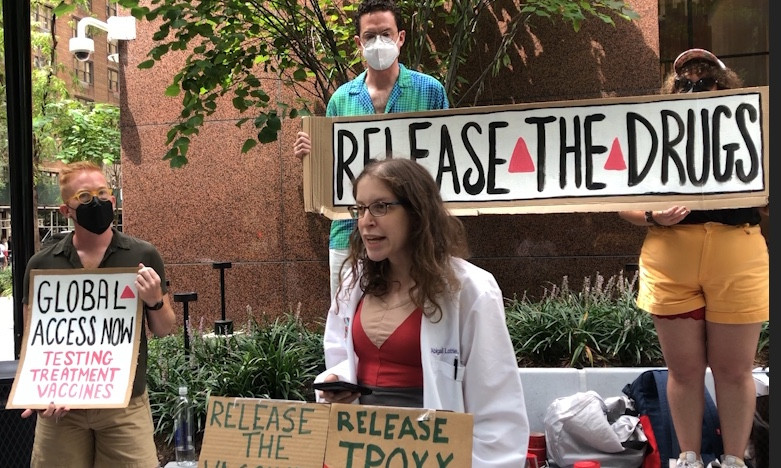
ACT UP Protest at Senator Schumer's NY Office
After 2 ½ years of battling Covid 19, with 555 deaths occurring daily in the US, now we have another viral epidemic called Monkeypox, a virus similar but not as lethal as smallpox.
Tonight we’ll be discussing some of the knotty problems associated with the disease. We’ll be focusing on why the disease is happening when there exists effective vaccines and treatments for the disease.
We’re joined in studio by James Krellenstein, of the AIDS Activist group Prep4all, who was one of the organizers of the activist response to the failures of the federal, state and local government response to the Monkeypox outbreak. Click here to find out more.
About Out-FM
Out-FM is a weekly progressive queer show on listener-sponsored, noncommercial WBAI/Pacifica Radio. It airs at 99.5 and wbai.org, generally on Tuesdays from 8-9 PM. Please support us by donating to WBAI. Become a member for $25 or a BAI Buddy (sustainer) for $10/month or more, or go to our premium site if you'd like a gift. Go to give2wbai.org or call 212-209-2950 and let WBAI management know you listen to Out-FM by supporting the station with a donation. Be sure and mention us when you donate.
Toby Emmer: A Remarkable Life of Struggle Against Racism, Imperialism and Repression
- Details
(Aired on August 2, 2022)

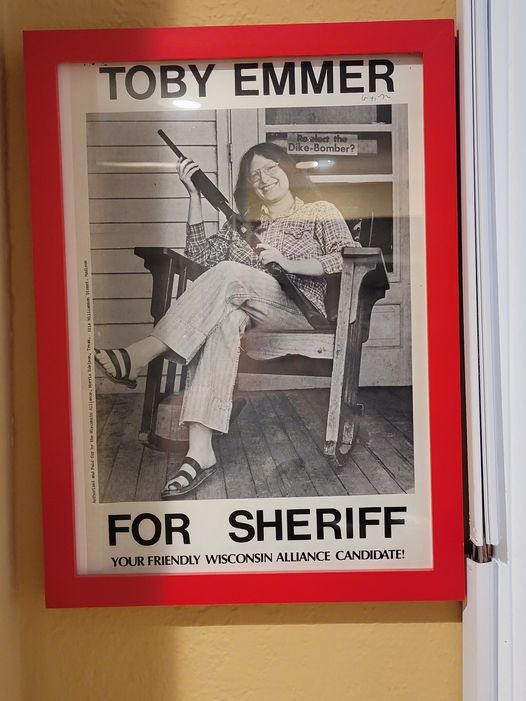
Toby's campaign poster in 1972 running against the repressive sheriff in Madison, WI.
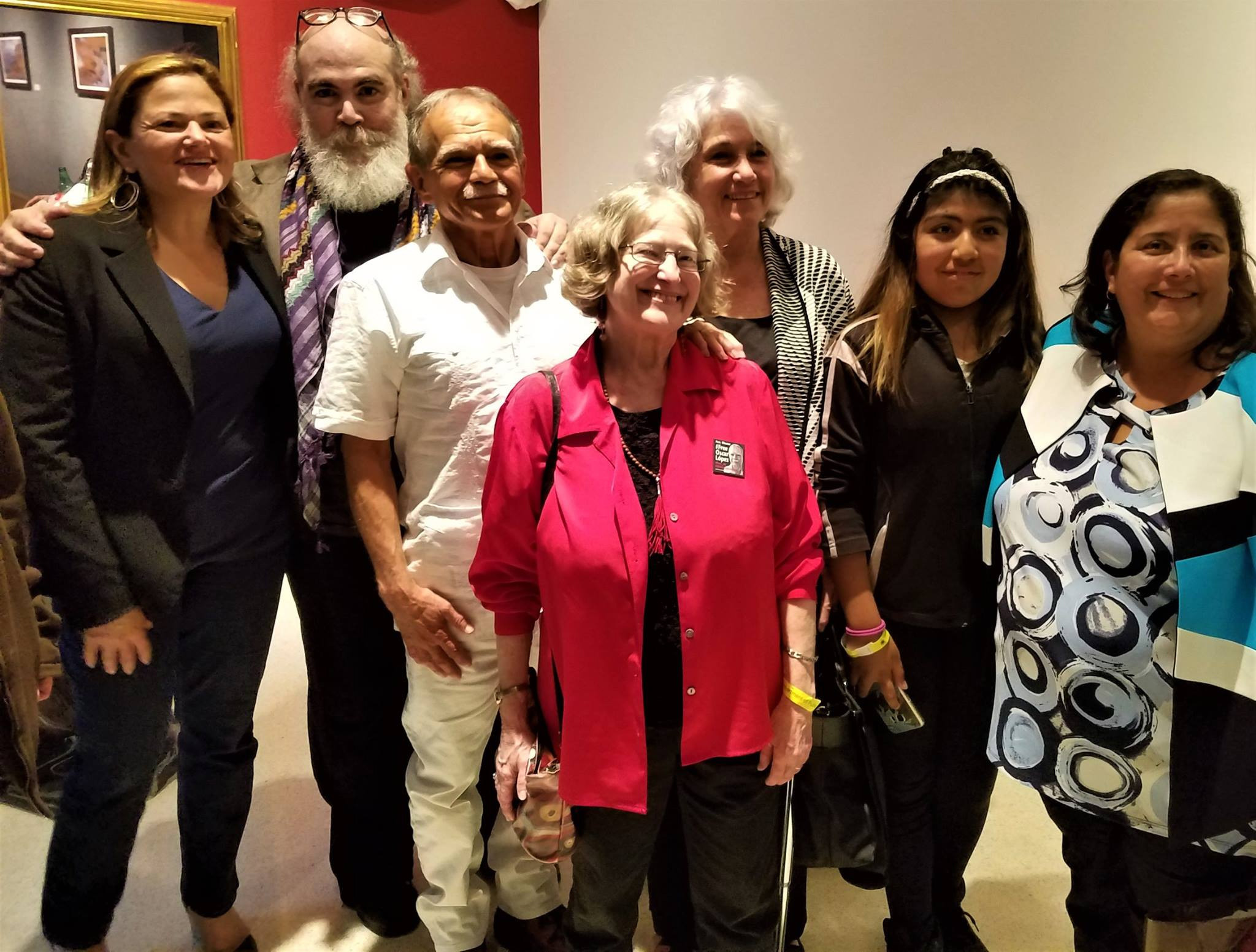
Toby Emmer at center in red, with former political prisoner Oscar Lopez Rivera to her left, along with other activist colleagues; our guest Ana Lopez is at the right
We remembered and paid tribute to the remarkable life of Toby Emmer, a lifelong anti-capitalist, anti-imperialist, and anti-racist activist, and a bisexual woman, who died on May 15 at age 78 after a short illness. She lived in Brooklyn.
The program featured interviews recently conducted by Out-FM co-producer Bob Lederer with two good friends of Toby:
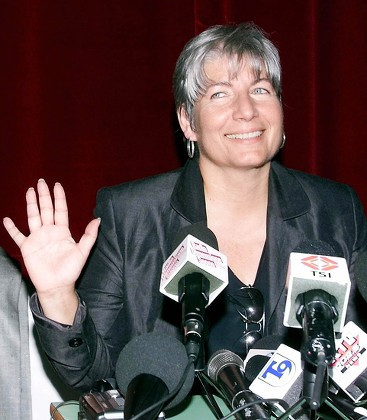
Silvia Baraldini, former U.S. political prisoner
Silvia Baraldini, a lifelong anti-imperialist, former U.S. political prisoner, and a bisexual woman. Silvia is an Italian citizen who did the first phase of her political work in the U.S, where she ultimately became a political prisoner. In 1984, Silvia was convicted of having participated in the escape/liberation from prison of Assata Shakur, a member of the Black Liberation Army now living as a political refugee in Cuba, as well as other actions in solidarity with the Black Liberation Movement. In 1999, after 17 years in prison and a long grassroots pressure campaign in the U.S. (largely led by Toby Emmer) as well as in Italy, President Clinton was forced to return Silvia to Italy. She was released from prison in 2006. Silvia is currently a member of the Fondazione la Rossa Primavera, whose primary objective is collecting, preserving and making available materials from Italy’s revolutionary movements of the 1970s and 80s. Toby worked closely with Silvia, when the latter activist was still in prison, in leading the Committee to Return Silvia Baraldini to Italy. Silvia joined us from Rome, Italy.
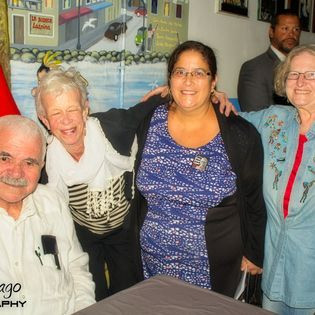
Ana Lopez, longtime activist for Puerto Rican independence (center) with former political prisoner Rafael Cancel Miranda (1st row left), solidarity activist Elspeth Meyer; Toby Emmer at right
Ana Lopez, longtime activist for Puerto Rican independence, was New York coordinator of the National Committee to Free Puerto Rican Political Prisoners and Prisoners of War in the 1980s and more recently, coordinator of the New York branch of the national and international campaign to free Oscar Lopez Rivera, the last of the Puerto Rican political prisoners. In 2017, after 36 years in prison, Oscar was granted clemency by outgoing President Obama, thanks to a massive international pressure campaign. Ana is also Assistant Professor of Latin American Studies at Hostos Community College, part of the City University of New York.
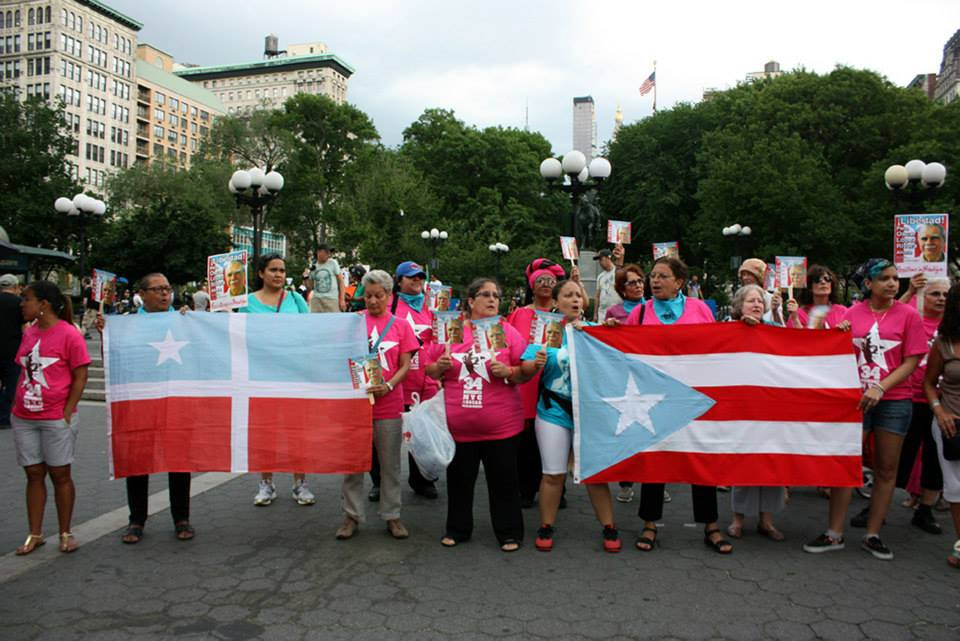
Free Oscar Lopez Rivera march (Ana Lopez center, Toby Emmer center of right flag)
******************
We urge those of you who cherish Toby’s memory to make a donation so that listener-sponsored, progressive radio station can survive. Only by refusing to take corporate funding can this station, and its parent Pacifica network, keep radical voices on the air. Funding is more at risk now than ever. Any donation, however small, will make a real difference. Please visit give2wbai.org. Thanks so much for your support.
********************
EXCERPTS FROM TWO TRIBUTES TO TOBY EMMER
About Out-FM
Out-FM is a weekly progressive, intersectional queer show on listener-sponsored, noncommercial WBAI/Pacifica Radio. It airs at 99.5 and wbai.org, generally on Tuesdays from 8-9 PM. Please support us by donating to WBAI. Become a member for $25 or a BAI Buddy (sustainer) for $10/month or more. Go to give2wbai.org and let WBAI management know you listen to Out-FM by supporting the station with a donation. Be sure and mention us when you donate.